Intrinsic semiconductors
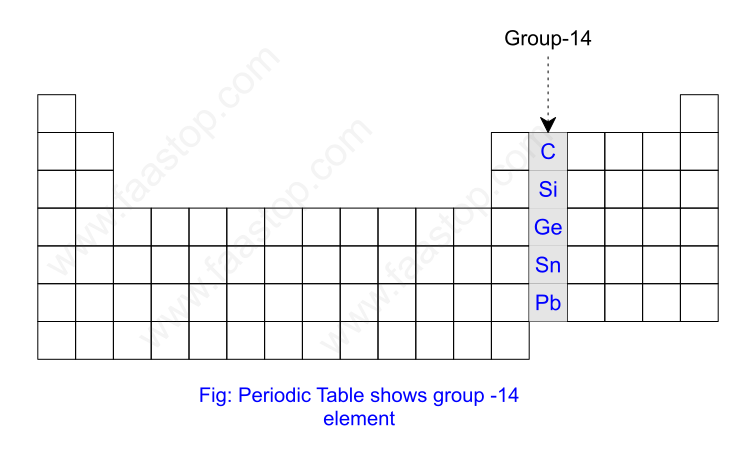
Intrinsic semiconductors are pure semiconductors. Silicon (Si) and Germanium (Ge) are well-known examples and belong to Group 14 of the periodic table (see figure).
Silicon and germanium have similar atomic structures, but germanium's valence electrons occupy higher energy levels, making it less stable at high temperatures and causing excessive reverse current. Thus, silicon is preferred as a semiconductor (see figure).
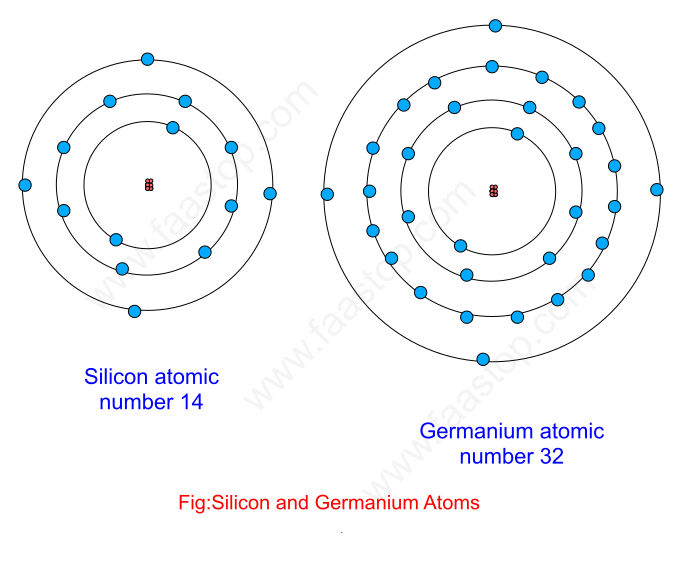
Semiconductor atoms have four electrons in their valence shell, as shown in the figure. To achieve greater stability, atoms generally seek to complete their valence shell with eight electrons, following the octet rule.
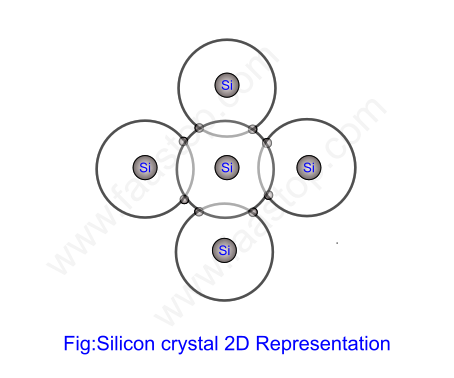
A silicon (Si) atom shares its four valence electrons with four neighboring atoms, resulting in eight shared electrons per atom and thus achieving chemical stability. This sharing forms strong covalent bonds that hold the atoms together, as illustrated in Figure.
A two-dimensional representation of silicon crystal is shown in the Figure.